Headless operating system

Adhoc

A place to build and run personal apps as data, not deployments.

Dark Adhoc interface mockup with Poly, app cards, and data rows

The product story

Apps are data, not deployments.

Adhoc is organized around three layers: a universal data body, a server-driven presentation face, and an AI reasoning brain that works through the same command path as the product.

D Data

Entity_Core stores app data as resources with polymorphic JSON. User-facing workspace data belongs in this per-entity tier.

F Face

ViewEngine renders server-driven UI from structured app data, so interfaces can change without shipping a new product build.

B Brain

Poly reasons over the workspace and uses exposed commands. User, Poly, and automation writes run through the Command Bus.

Diagram of Adhoc Data, Face, and Brain layers

T0 recording slots

Demo loops will become the media.

These frames are intentional placeholders. Austin records the real T0 loops after each script is proven in a browser, and those recordings replace the slots.

D1

Plan a trip end-to-end

Create a trip with travel, stays, embedded days, calendar materialization, and Poly sync.

D2

Share a recipe

Person-share a resource, show its capsule card in chat or feed, and put it into a shared space.

D3

Capture media into chat

Capture media, attach it through chat on Adhoc storage, then reuse it through the GIF picker.

D4

Poly builds an app

Chat with Poly, scaffold an app, render sourced sections, fill complete forms, and see the data land in the workspace.

D5

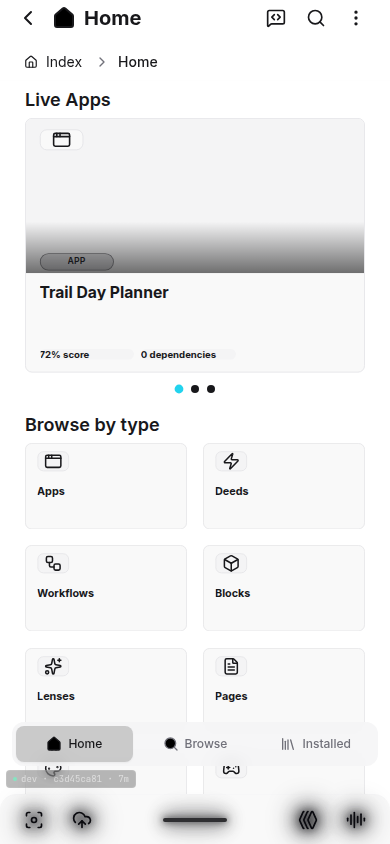
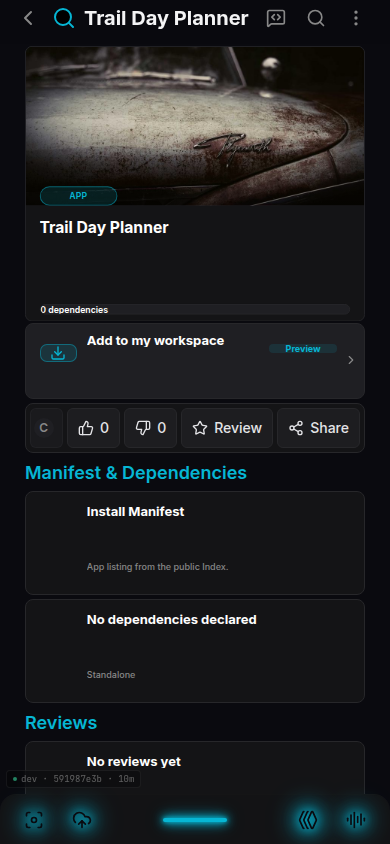
Browse the Index and install

Find an app in the Index, install it, and use it from the workspace instead of starting from a blank surface.

D6

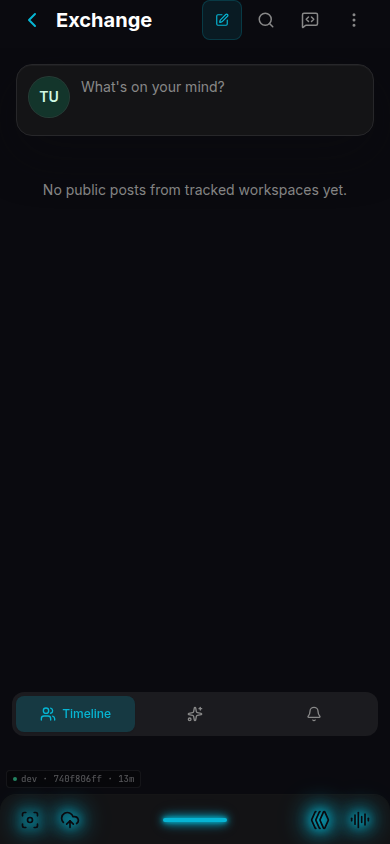
Post to the feed

Publish a post, interact with it after reload, comment, and show fact-check badge behavior where the loop supports it.

Poly

The assistant builds and uses your apps.

Poly is the reasoning layer for Adhoc. It sees the workspace state it is given, follows the exposed command catalog, and writes through the same Command Bus contract as users and automations.

Plan my trip and add the confirmed stops to Agenda. user
Read resources, propose changes, then write through commands. Poly
Trip, calendar events, and app data stay in the workspace. Data

Privacy and consent

Contribution is opt-in.

A freshly provisioned entity starts with data contribution off. Consent is user-initiated, applies on every plan, and can not be changed by Poly or Deeds.

  • Contribution tiers live in the Entity_Core preferences resource.
  • Shared contribution data uses pseudonymized identifiers.
  • Support and rights requests go to support@adhoc.app.

Pricing

Founding Beta starts free.

Founding Beta is planned as free workspace access with a fixed credit grant. Credits cover metered compute and provider work.

Public pricing, paid tiers, top-ups, and commerce rules are still pending. This page will not invent numbers before those decisions are made.